Oceanus12 Demonstrates Autonomous Deployment of Multiple Oshen C-Star Surface Vehicles
Oceanus12 Demonstrates Autonomous Deployment of Multiple Oshen C-Star Surface Vehicles
ZeroUSV has demonstrated the autonomous deployment of multiple Oshen C-Star surface vehicles from Oceanus12, showing how a single long-endurance USV can deploy and support multiple autonomous assets within the same mission.
A new approach to distributed autonomous operations
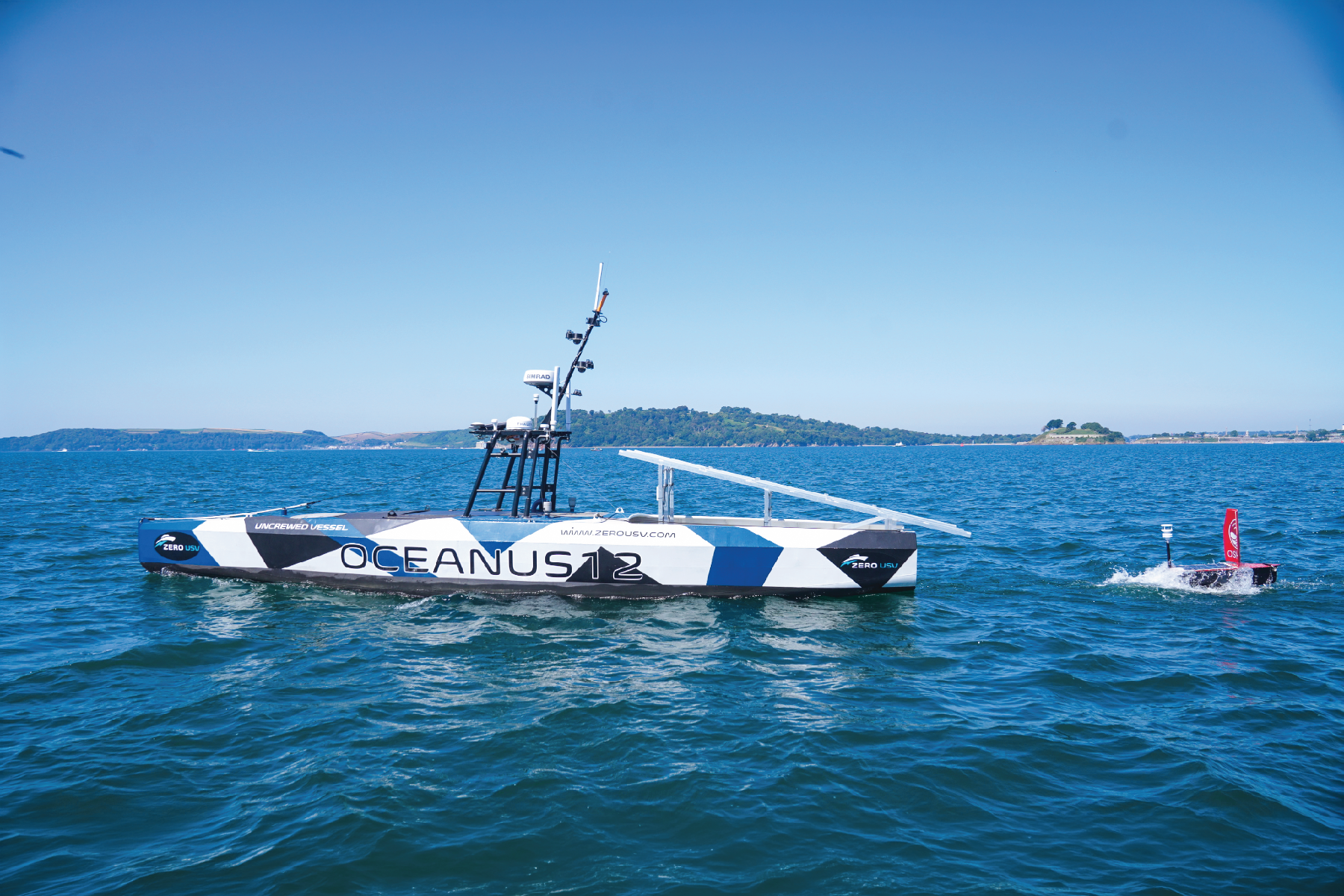
ZeroUSV has demonstrated the autonomous deployment of multiple autonomous surface vehicles from its Oceanus12 uncrewed surface vessel during trials in Plymouth.
The demonstration saw Oceanus12 deploy two Oshen C-Star surface vehicles as part of a coordinated mission. It represents a significant step in demonstrating how a larger autonomous platform can deploy and support multiple smaller autonomous systems within a single operation.
The trial was conducted as part of an ongoing UK Defence Innovation-backed programme, with ZeroUSV working alongside Oshen and MarineAI. The programme brings together Oceanus12, Oshen’s C-Star vehicles and MarineAI’s GuardianAI autonomy technology to demonstrate an integrated, multi-platform autonomous capability for defence and security applications.
The programme was first announced earlier in 2026 as a UKDI-backed autonomous underwater sensing project exploring how distributed uncrewed systems could support underwater operations.
Coordinating multiple autonomous platforms
For the trial, the C-Star vehicles were configured to collect acoustic data. The lightweight surface vehicles are sail- and solar-powered and can be equipped with different sensors for applications including environmental monitoring, defence operations and monitoring of critical underwater infrastructure.
MarineAI’s Guardian autonomy suite provides the navigational autonomy used across the demonstration, supporting the planning and coordination of complex missions with minimal operator input. This allows the different autonomous platforms to operate as part of a coordinated mission rather than as isolated systems.
The demonstration therefore extends the role of Oceanus12 beyond that of a conventional payload carrier. The vessel can deploy autonomous assets and subsequently provide operators with information on their location, status and performance, including in circumstances where conventional communications may be unavailable, unreliable or deliberately denied.
A flexible platform for different missions
Oceanus12 has been developed as a modular autonomous platform capable of carrying and deploying different payloads and being reconfigured for different mission requirements.
The C-Star demonstration highlights this flexibility by showing how a single Oceanus platform can support several autonomous assets within one operation. The approach has potential relevance across missions where distributed sensing, wider area coverage or access to difficult maritime environments is required.
For defence and security operations in particular, the ability to deploy autonomous systems without placing personnel directly into hazardous environments can reduce operational risk while extending the reach of maritime sensing and surveillance.
The demonstration also shows how autonomous platforms can complement rather than simply replace crewed assets, allowing a larger vessel to act as part of a distributed network of autonomous systems.
Scaling autonomous deployment
The Plymouth trial is an initial demonstration of the concept, with the next phase of the programme planned to increase the number of deployed vehicles.
Oceanus12 is expected to autonomously deploy four C-Star vehicles simultaneously, providing an opportunity to demonstrate distributed autonomous systems operating together at greater scale.
For ZeroUSV, this progression is an important part of demonstrating how autonomous maritime operations can move from individual platforms towards coordinated teams of systems, with a single autonomous vessel supporting multiple assets during a mission.
Media coverage
This demonstration has also been covered by a number of maritime, defence and technology publications, including:
- DeeperBlue — ZeroUSV Demonstrates Multi-Drone Autonomous Deployment
- Navy Leaders — ZeroUSV Drone Boat Deploys Smaller USVs In UK Technology Trial
- Defence Blog — UK maritime drone launches smaller drones at sea
- Marine Insight — ZeroUSV Demonstrates World-First Autonomous Deployment Of Multiple Surface Drones From A USV
- Hellenic Shipping News — ZeroUSV achieves world first with autonomous deployment of Oshen C-Star surface drones from Oceanus12
- EDR Magazine — ZeroUSV achieves world first with autonomous deployment of Oshen C-Star surface drones from Oceanus12
- Naval Technology — Oceanus12 deploys two smaller USVs in UK trial
- The Maritime Executive — ZeroUSV Achieves World First with Autonomous Deployment of Surface Drones
- Ocean News — ZeroUSV Achieves World-First Autonomous Deployment of Oshen C-Star Drones from Oceanus12
- Ocean Economist — ZeroUSV Achieves World-First Autonomous Drone Deployment From Oceanus12


- 12 March 2024
Zero USV to Launch World’s First High Endurance Open Ocean Autonomous Vessel Fleet – Oceanus12

- 7 March 2024