Royal Navy Plymouth built vessel achieves a series of notable milestones
This article explores how ZeroUSV’s Plymouth-built Oceanus12 is supporting the Royal Navy in trialling an innovative autonomous sensor network, demonstrating the platform's vital role in advancing persistent surveillance capabilities for the wider defence sector.
Source: Originally published on February 3, 2026 by Plymouth Herald — Royal Navy to use Plymouth-built vessel to help run undersea drones
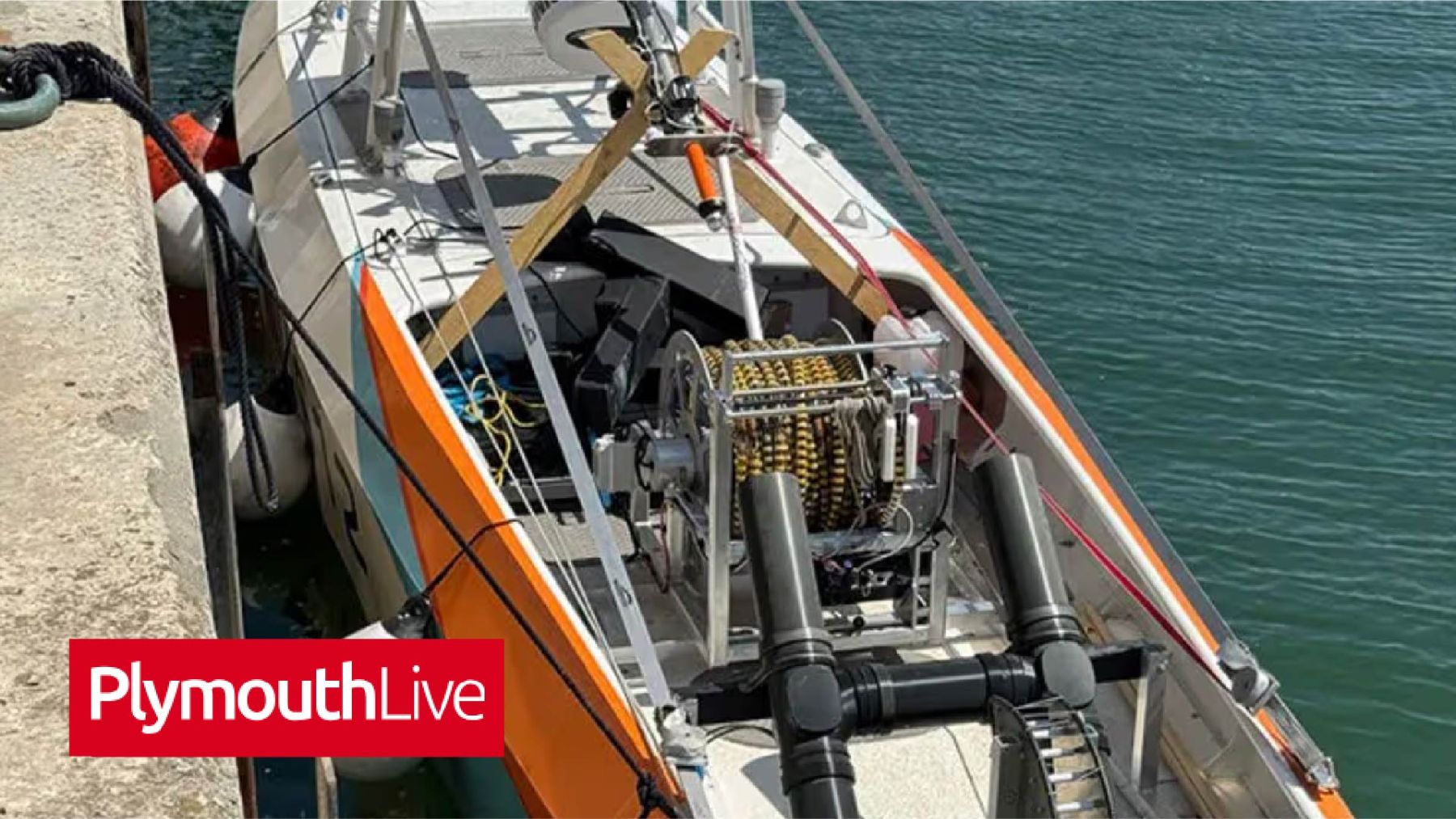
A new collaboration between ZeroUSV, MarineAI, and Oshen is set to enhance how the Royal Navy monitors sub-surface activities using autonomous technology. Supported by the Defence and Security Accelerator (DASA), the project focuses on utilizing our 12-metre Oceanus12 uncrewed surface vessel (USV) as a primary "mothership" for a distributed network of smaller autonomous craft.
During the upcoming trials, the Oceanus12 will autonomously deploy a fleet of sail-powered micro-vessels across a wide area. These assets act as a passive acoustic mesh, designed to track and relay status updates from underwater assets—such as the Royal Navy’s extra-large uncrewed underwater vehicle (XLUUV), Cetus—without relying on detectable, high-bandwidth radio transmissions.
Matthew Ratsey, Managing Director of ZeroUSV, highlighted that this initiative addresses a key challenge in modern naval operations: maintaining contact with silent sub-surface assets in remote environments. By coordinating these vessels through advanced autonomous software, we provide a low-signature method for ensuring mission success. This project not only showcases the technical capabilities of our Plymouth-built fleet but also reinforces the city’s position as a global leader in maritime autonomous innovation.
This article is based on reporting originally published by Plymouth Herald. The original article can be read in full here.


- 12 March 2024
Zero USV to Launch World’s First High Endurance Open Ocean Autonomous Vessel Fleet – Oceanus12

- 7 March 2024