How Autonomous Surface Vessels Could Strengthen Maritime Border Security
Addressing the Challenges of Maritime Border Security
Coastal authorities face the challenge of identifying suspicious activity across busy shipping routes, ports and extensive maritime borders. Traditional patrol vessels, aircraft and helicopters remain important assets, but maintaining comprehensive surveillance across these areas is resource-intensive.
Maritime security also extends beyond the movement of people and goods to illegal fishing, piracy and potential interference with critical infrastructure such as subsea communications cables and energy pipelines.
In his commentary published in late 2024, Ratsey argued that technology and closer cooperation between government and industry would be important in developing more effective approaches to these challenges.
How USVs Could Support Border Surveillance
Uncrewed surface vessels offer a potential means of extending maritime surveillance without requiring personnel to remain aboard the platform. Depending on their configuration, USVs can carry equipment such as cameras, radar, sonar and infrared sensors to gather information about surrounding activity.
Their endurance can also support longer monitoring missions, allowing authorities to maintain surveillance over areas that would otherwise require repeated crewed patrols. Information collected at sea can be relayed to shore-based teams, supporting their wider monitoring and assessment activities.
These capabilities could be relevant to identifying unusual vessel movements, monitoring sensitive maritime areas and providing additional information to law enforcement and coastal security organisations. Their practical contribution would depend on the vessel's equipment, communications arrangements and integration with the organisations responsible for responding to potential threats.
The Role of Artificial Intelligence
AI can support both the operation of an uncrewed vessel and the interpretation of data gathered during a mission. By helping identify patterns, classify contacts and prioritise potentially significant activity, onboard processing can reduce the volume of information that shore-based operators need to assess manually.
This combination of autonomous platforms and data processing offers the potential to improve situational awareness across larger areas. Rather than relying exclusively on personnel to monitor every incoming data stream, AI-supported systems could help prioritise information for further assessment.
Safe operation remains essential, particularly in congested shipping lanes and around navigational hazards. Ratsey's commentary highlights the importance of developments in sensing, onboard computing and communications in helping autonomous vessels operate in complex maritime environments.
Oceanus12 and Autonomous Operations
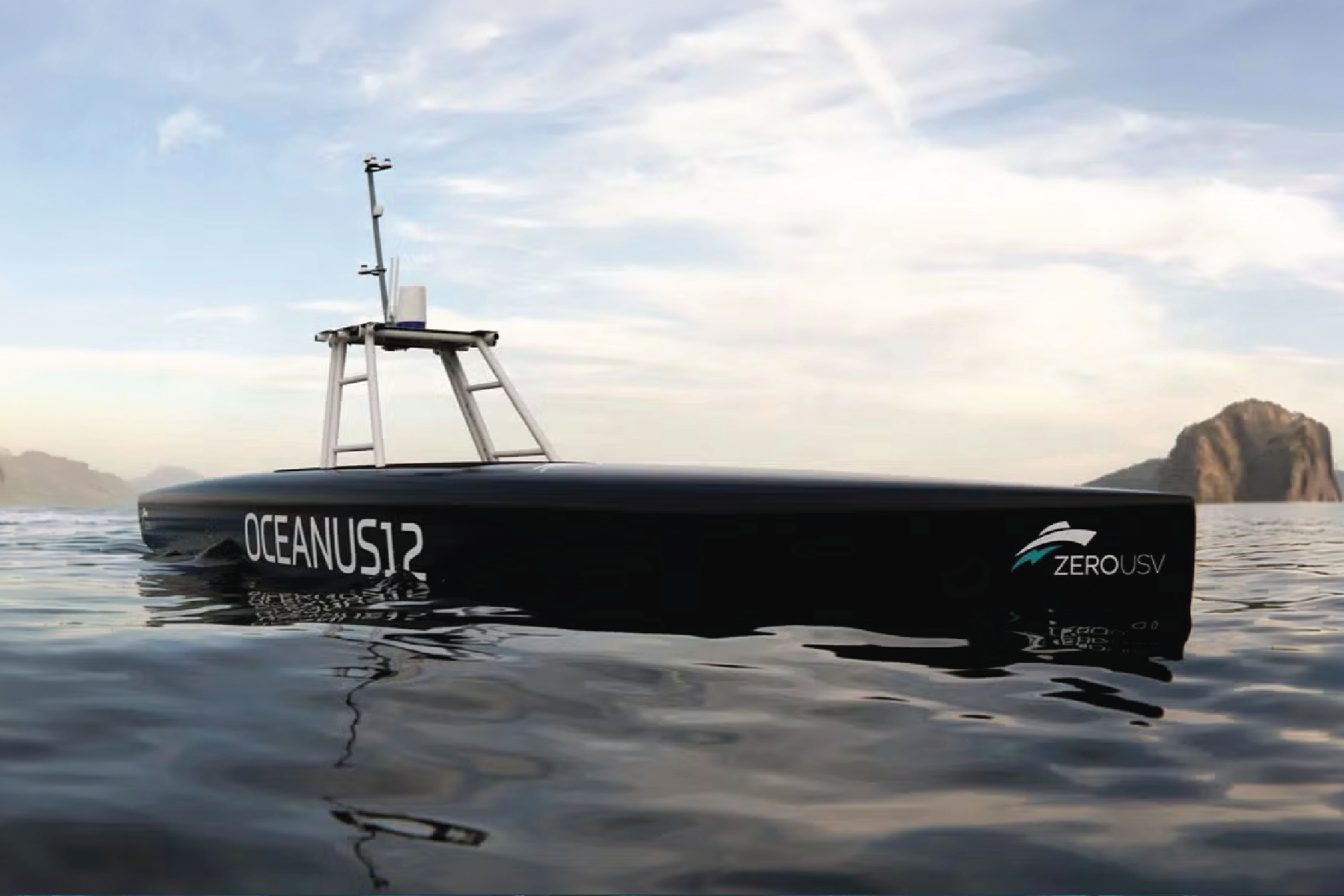
ZeroUSV's Oceanus12 is a 12-metre uncrewed surface vessel designed for beyond-horizon operations. The platform forms part of the company's work to develop autonomous maritime capabilities for a range of operational requirements.
Oceanus12-class vessels equipped with MarineAI’s GuardianAI autonomy software can be configured to operate as coordinated platforms, sharing information to support wider situational awareness..
For defence and maritime security applications, the value of such capabilities would depend on the mission, onboard payloads, communications infrastructure and the way information is incorporated into existing operational procedures. Autonomous vessels could provide an additional surveillance resource alongside crewed platforms and shore-based monitoring systems.
Safe Integration into Maritime Operations
The potential benefits of USVs include extended operating periods and reduced requirements for personnel to be physically present at sea. Removing crew accommodation and support requirements can also affect a vessel's payload capacity and operational endurance.
However, autonomous systems must be able to operate safely around other vessels, structures and changing sea conditions. Reliable sensing, obstacle detection, communications and appropriate operational oversight are important considerations when deploying these technologies in busy maritime environments.
The development of effective border-security capabilities will therefore involve more than the vessels themselves. Cooperation between technology developers, government departments, maritime operators and law enforcement will be important in ensuring that autonomous systems meet practical operational needs.
Integrating Autonomous Systems into Maritime Security
Autonomous surface vessels and AI offer additional ways to extend maritime surveillance and improve awareness of activity at sea. Their value will be greatest when they complement existing crewed assets, shore-based monitoring and established command structures rather than operating in isolation.
As maritime threats and operational requirements evolve, collaboration between government, operators and technology providers will be important in determining where autonomous systems can provide the greatest operational benefit.
Media coverage
Matthew Ratsey's original commentary on autonomous vessels and maritime border security was published by:


- 12 March 2024
Zero USV to Launch World’s First High Endurance Open Ocean Autonomous Vessel Fleet – Oceanus12

- 7 March 2024